 The right vessel
Wines are matured in various vessels on the Saale and Unstrut rivers. These range from the widespread use of stainless steel tanks to large and small wooden barrels, right through to storage and maturation in the bottle. Regional winegrowers carefully and meticulously select the size and type of container to best highlight the characteristics of each wine while preserving the original character of the grape varieties and terroir.
Stainless Steel Tank
The capacity starts at 1,000 litres, but can also be as high as 12,500 litres. Stainless steel is chemically neutral and does not impart any aromas (such as wood notes) to the wine, allowing the natural fruit and acidity to come to the fore. The airtight seal prevents oxidation, preserves the lively, primary fruit aromas and keeps the wine crisp and fresh. The winemaker can precisely control the temperature during fermentation, which influences the development of the aromas. The steel tank is ideal for bringing out the characteristics of a particular grape variety without distortion. The process is ‘reductive’, i.e. oxygen-free, in contrast to ‘oxidative ageing’ in wooden barrels. We will come to that in a moment.
Large wooden barrel
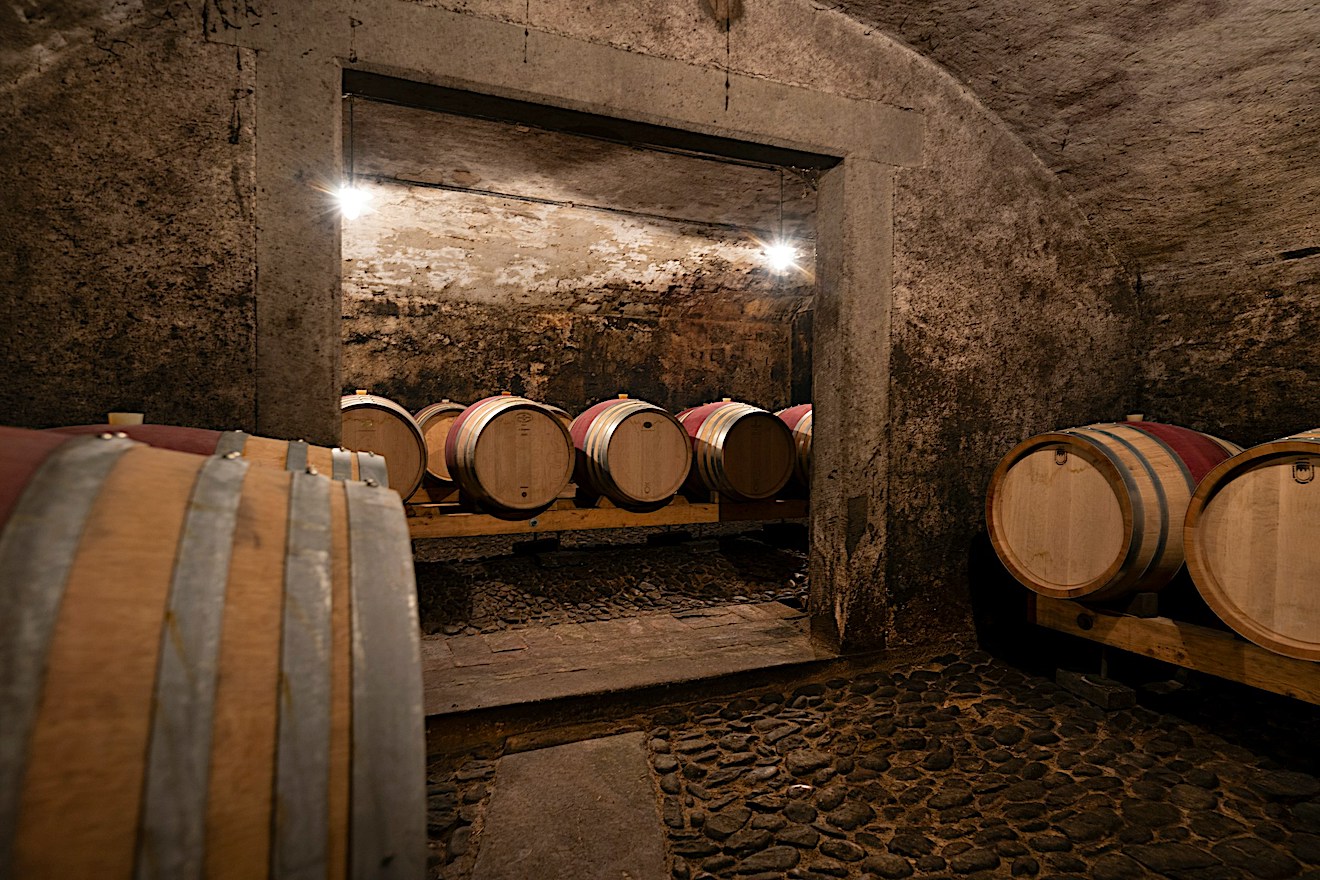
Capacity always over 500 litres. Maturation in wooden barrels allows for a constant supply of oxygen due to the permeable surface of the wood. This gives the wine elegance and character. In large wooden barrels, the influence of the container is more subtle due to its larger capacity and does not dominate the foreground. Aging in large wooden barrels produces less intense wood/toast aromas than in smaller barrels, as the ratio of surface area to wine volume is lower.
Tonneau (also a wooden barrel)
Capacity: 450 litres, sometimes 500 litres, formerly very often 900 litres. Compared to larger wooden barrels, the tonneau oak barrel offers a higher wood surface area per unit volume of wine due to its shape. This allows for increased oxygenation through the container, which in turn accelerates and optimises the maturation and development of the wine. The result is elegant wines with a balanced fullness of flavour and considerable ageing potential. This method was popular in the Middle Ages but was supplanted by the barrique (see below). However, it is now experiencing a renaissance as a means of imparting complexity and smoothness to wines.
Barrique (a small wooden barrel)
Capacity strictly up to 225 litres. Barrique barrels have the highest ratio of wood surface area to wine. The increased contact with oxygen gives the matured wines an expressive and elegant character. The wood aromas are present on the palate but not dominant, contributing to the unique character, sophistication and longevity of the wines. The wine gains more structure and body, and gentle oxidation is enabled. This occurs through the interaction of tannins and vanillin from the wood with the wine, with the intensity varying depending on the type of oak, degree of toasting and length of use of the barrel.
Ageing in the bottle
Bottle capacity 0.75 litres (hey, who's surprised?), but bottles containing one and a half litres or even three litres (known as magnum bottles) are also common. After bottling, the wines continue to mature under ideal conditions in the bottle – a decision made by the winemaker. This gives the wines time to develop harmony and balance. The storage conditions of the bottles (temperature, light, location) have a decisive influence.